Your attic can collect a lot of heat and moisture throughout the year, which can cause problems like potential damage to stored items and general discomfort. However, this doesn’t have to be your attic’s reality if you don’t want it to be. All you need is a professional attic fan installation to make these problems a thing of the past.
At New London Electric, we specialize in installing a comprehensive range of electrical systems, including new attic fans that can make removing all that pesky heat and moisture a breeze. From assessing your current electrical systems’ compatibility through to planning and installation, our team makes getting your attic properly ventilated simple and easy.
What Does an Attic Fan Do for Your Home?
Attic fans help remove hot, humid air from the attic and encourage replacement air to enter through intake vents. Most attics don’t get the proper ventilation that they need to keep people comfortable and belongings safe from moisture. But the steady airflow that these fans provide helps to make sure that these problems don’t persist.
Still, an attic fan is only one part of the ventilation system. Both intake and exhaust vents have their role to play and are essential to maintaining a balanced system that keeps air flowing in and out effectively.
What Should You Consider Before Installing an Attic Fan?
Every attic is different. The size, roof design, ventilation layout, and electrical setup all play a role when deciding on what type of attic fan and ventilation installation might work best.
This means that choosing a fan based solely on its power or airflow rating doesn’t necessarily guarantee the best results. You have to consider how it will actually work in your unique attic space. Seeking out a professional evaluation before an attic fan installation can take the guesswork out of this step.
Your Existing Attic Ventilation
Before adding powered ventilation, you should look at how air currently enters and exits your attic. Attic fans need adequate intake airflow to operate effectively. If your vents are blocked by insulation or don’t exist at all, you’ll need to address this before your installation project can begin.
The Size and Layout of Your Attic
Attic square footage is another important factor to consider when selecting a fan. The bigger the attic, the more powerful the fan will need to be to effectively circulate air.
Your attic’s layout also matters. Roof shape, framing, ventilation openings, and the location of existing electrical connections can all influence what might be the best approach.
Fan Type and Placement
Roof-mounted and gable-mounted fans are two of the most common options. But the right choice for your attic will heavily depend on your home’s construction, existing ventilation, available installation locations, and electrical access.
Placement also affects how efficiently air will be able to move through your attic, so it’s crucial that you consider all of these variables before starting a new installation. This helps guarantee that the fan will become an efficient and functional part of your attic’s overall ventilation system.
What Electrical Requirements Should You Plan For?
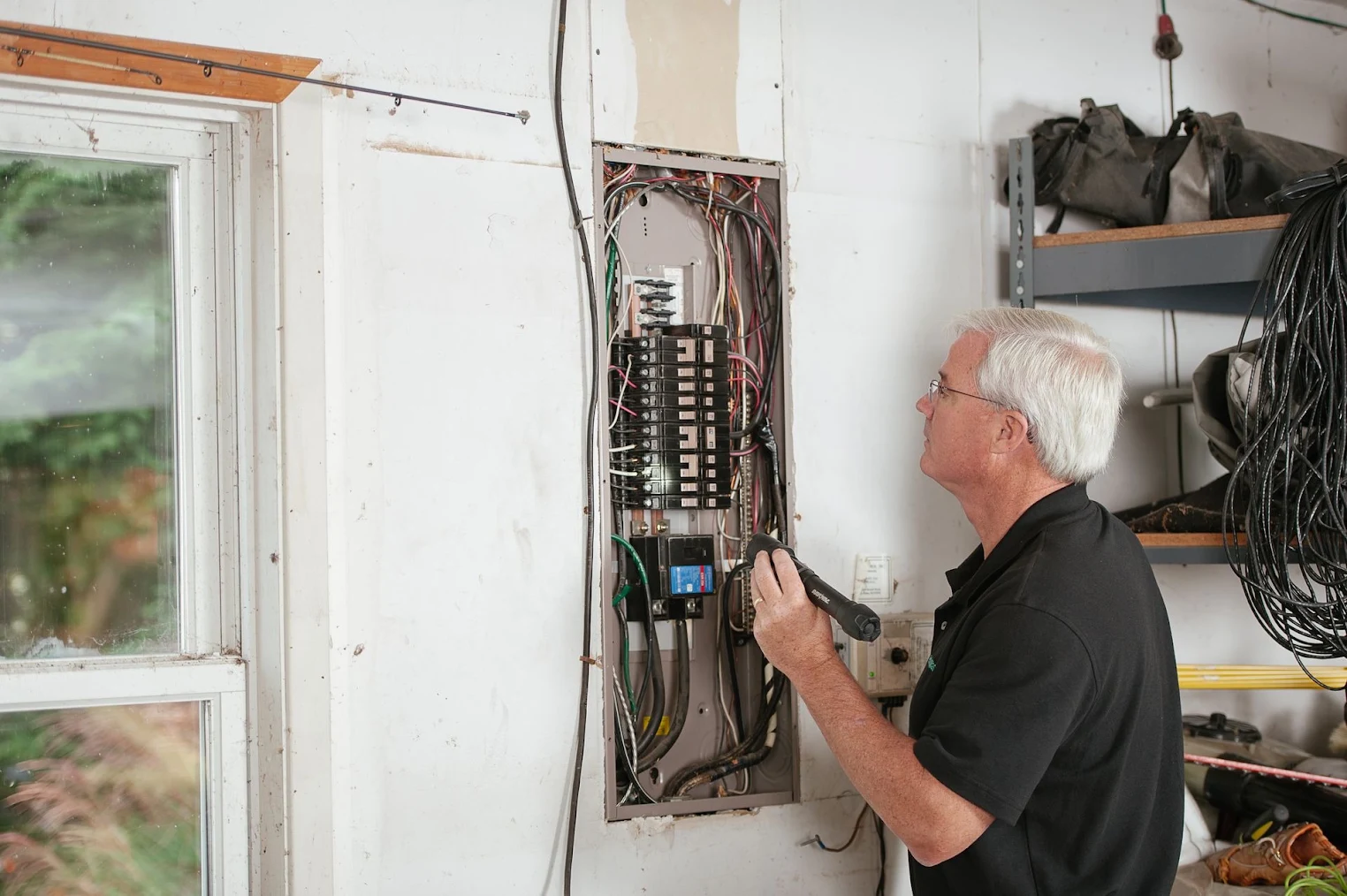
Powered attic fans need a safe electrical connection that matches the requirements of the selected equipment. Depending on the fan and your existing system, the project may need to involve the installation of new wiring, controls, switches, or connections to the appropriate circuit.
Our residential electrical services include a comprehensive range of professional electrical installation, maintenance, and repair work, making this part about as easy as can be. We’ll thoroughly evaluate your electrical setup and make any necessary adjustments before connecting your new attic fan so the installation seamlessly fits in with your home’s existing electrical systems.
Thermostats and Humidity Controls
Many of the most popular attic fans rely on automatic controls that respond to the conditions inside your attic. Ideally, you should have a thermostat equipped with a built-in hygrometer that can monitor the temperature and humidity levels in your attic and switch on the fan when necessary.
These modern controls are perfect for new attic fan installations because they allow the fan to operate when additional ventilation is needed without requiring you to manually switch it on and off throughout the day.
Safe Wiring and Electrical Connections
Attics often present unique electrical challenges because wiring may run around insulation, framing, lighting, and other equipment. These connections need to be safe and secure before the fan can be installed.
How Should You Prepare Your Attic Before Fan Installation?
Good access can make the installation process a lot more straightforward. Before work begins, the electrician will need to be able to reach the proposed fan location and all relevant wiring and ventilation openings.
Stored belongings, insulation, and framing can all get in the way, making it much more difficult for the installation team to do their job. That being said, if it involves anything other than moving your belongings out of the way, you should probably leave the rest of the prep work to the professionals.
Regardless of how easily accessible the installation area is, our team will help you identify any problems with access that may be present. Then we’ll give you recommendations, or simply update the timeline so that you’re aware of whether or not these issues might extend the length of the project.
Contact New London Electric Today
Are you ready to start your attic fan installation project? Give us a call.
At New London Electric, we’ve been serving Southern Chester County, PA, and Northern Delaware since 1994, and we’re always here and happy to answer any questions you have. We even offer free estimates and will work closely with you to be sure that your installation happens at a time that’s most convenient for you.
Contact New London Electric and get your next project started today.