Are you dealing with lights that dim, blink, or flicker without explanation? You’re not alone.
Flickering lights are easily one of the most common and annoying electrical issues homeowners face. The good news is that, in most cases, flickering lights are nothing to worry about.
However, there are certain situations where this issue could be a sign of a bigger electrical problem that requires professional attention.
If you’re wondering why your lights are flickering, here is everything you need to know about the potential causes of flickering lights and what you can do to fix them.
Why Are My Lights Flickering in My House?
Your home’s electrical system is designed to deliver steady power from the utility company to each individual outlet, switch, and light fixture in your home. However, there are a wide variety of issues that may prevent that constant flow of power from arriving at one of your lights. Even a slight interruption or reduction in power can and will cause a light to flicker. The hard part is figuring out why that interruption is happening.
In some cases, the problem may only occur with a single light, and in others, it may affect all of the lights in a room or the entire home. Each of these situations gives a clue as to what the problem could be, but unless it’s an easy fix like changing out an old light bulb, you’ll most likely need to call a professional electrician to figure out why your lights are flickering.
The Most Common Causes of Flickering Lights
There is an almost endless list of potential causes behind your flickering lights, ranging from simple faulty bulbs to extremely dangerous electrical hazards. Here are all the most common reasons why the lights may be flickering in your home:
Loose or Faulty Bulbs
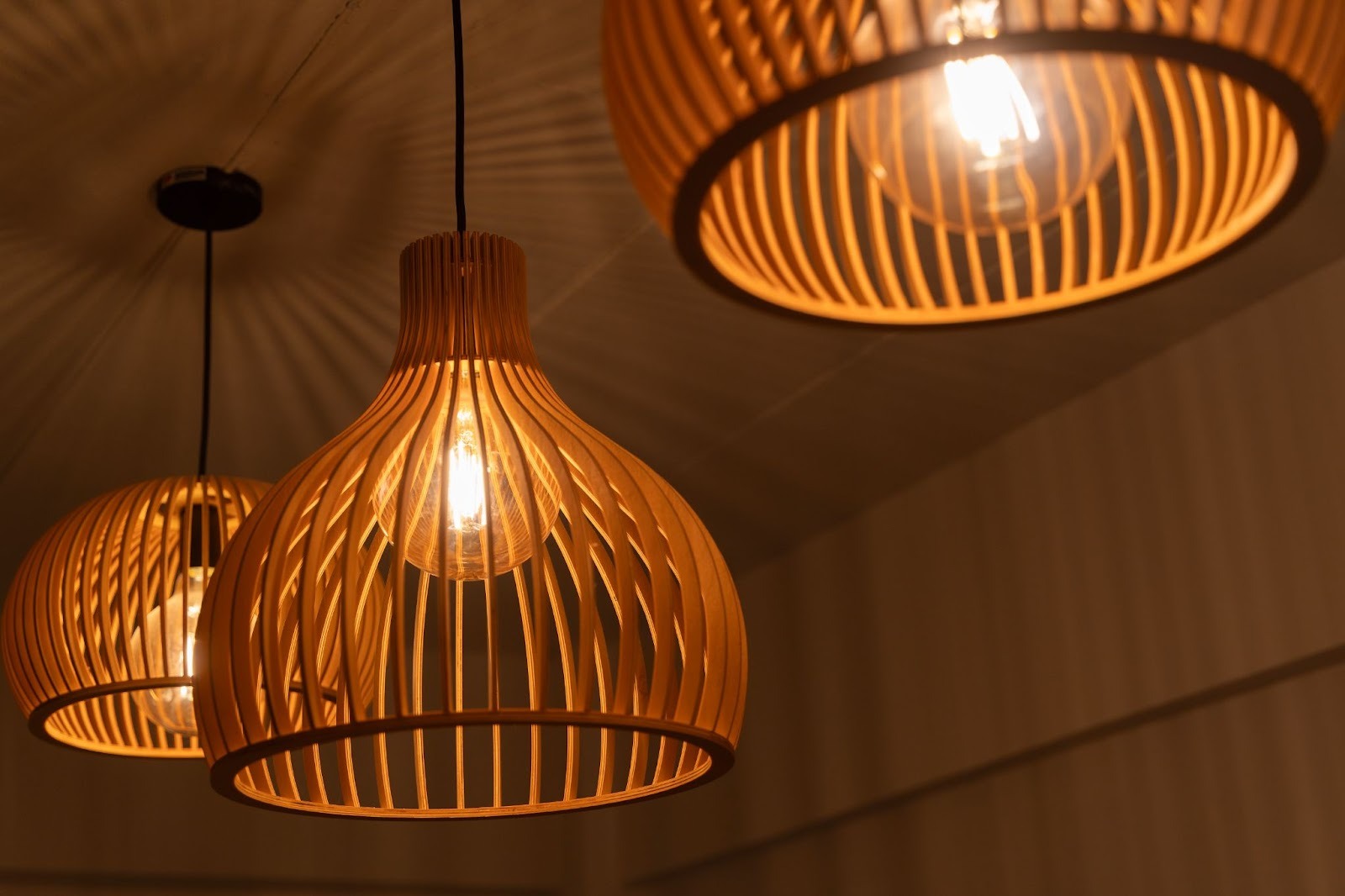
One of the most common and easy-to-fix causes of flickering lights is a loose or faulty light bulb. Light bulbs need to be securely screwed in to receive the power they need to provide consistent light. If the bulb becomes loose or the light socket is worn, it will cause the light to flicker.
Thankfully, fixing this issue is usually as simple as rescrewing the bulb or replacing it with a new one.
Incompatible or Failing Light Switches
Another common cause of flickering lights is the switches that they connect to.
Dimmer switches, in particular, are much more prone to this problem, with many older dimmer switches being completely incompatible with modern LED bulbs. Switches also wear out over time, so even if the switch is compatible with your bulbs, it could be a simple wear-and-tear issue that is preventing the switch from maintaining constant electrical contact.
Regardless of the specifics, if you notice that your light flickers when you are adjusting, a worn or faulty light switch is almost certainly the cause.
Voltage Fluctuations from Large Appliances
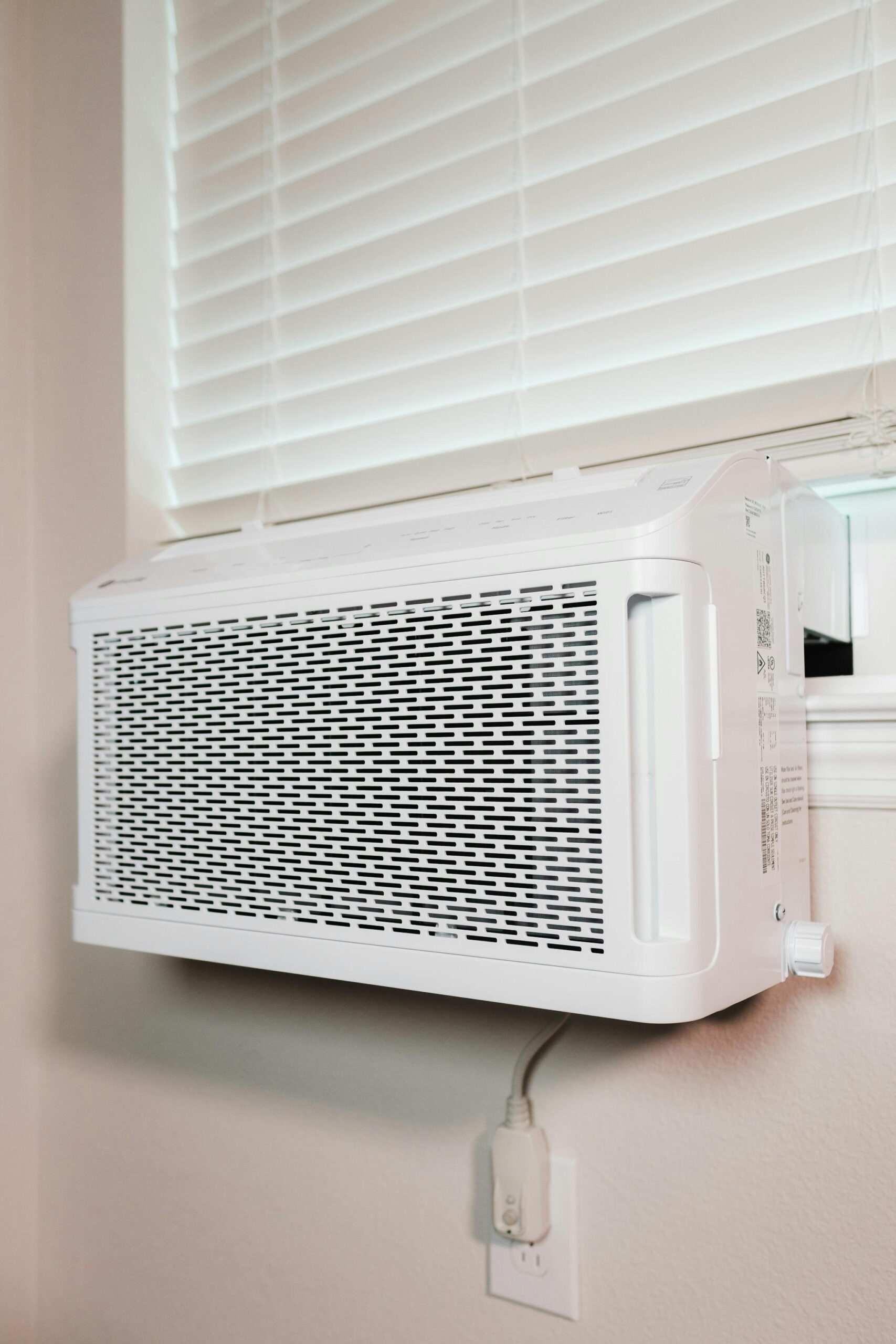
Large, power-hungry appliances like air conditioners, refrigerators, and washing machines can also cause lights to flicker, especially when they first turn on.
These appliances use up a lot of power, and the sudden increase in demand for power when one of these appliances turns on often causes a sudden reduction in available power for your lights, causing them to dim or flicker.
Occasional flickering when one of these appliances starts up is completely normal, if the problem becomes more severe and consistent, it could be a sign of an overloaded circuit or some other more serious electrical issue.
Loose Electrical Connections
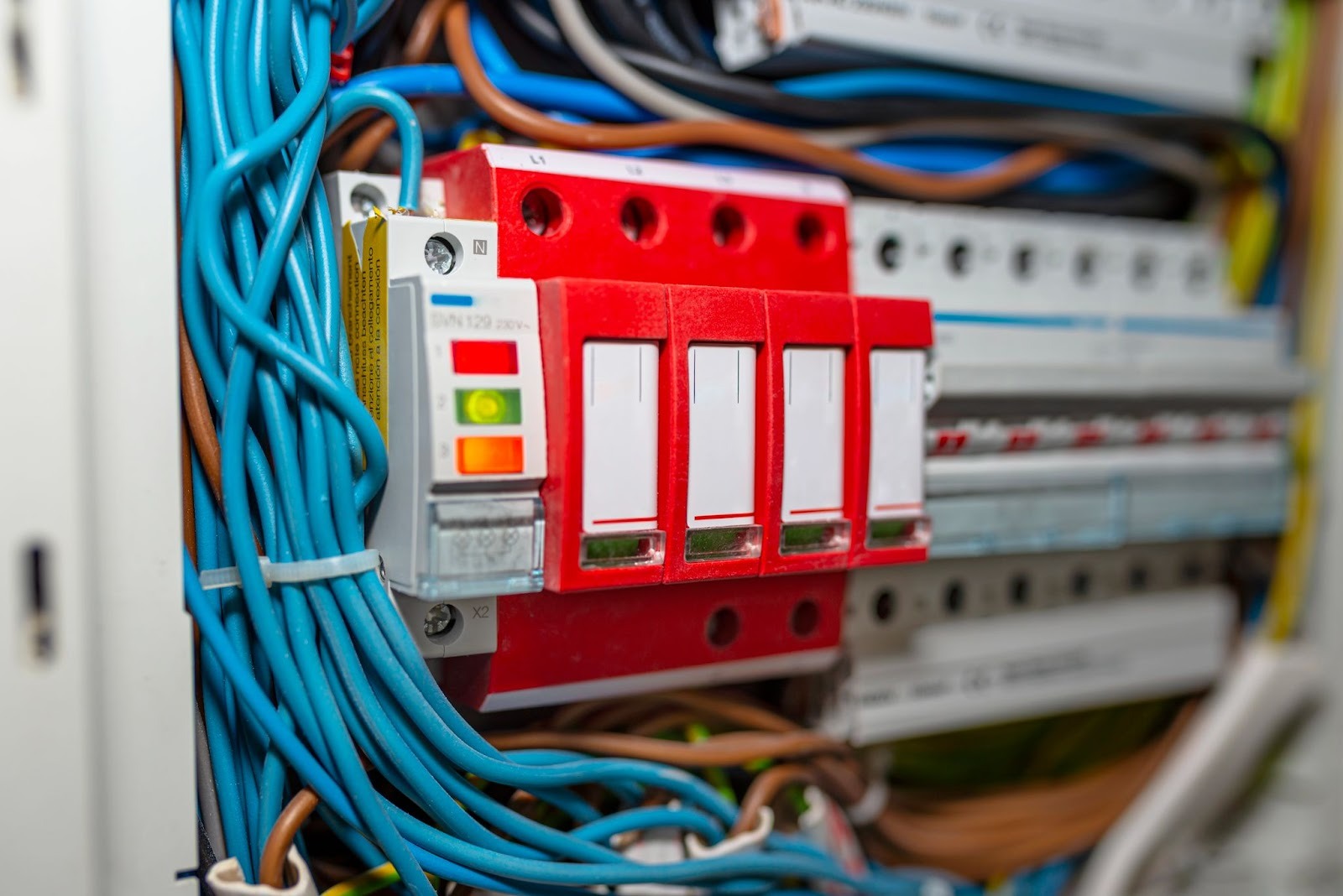
One of the most dangerous causes of flickering lights is a loose electrical connection. Loose wiring connecting to outlets, switches, light fixtures, or your electrical panel can all cause light flickering, in addition to hazardous arcing and heat generation.
This is a serious problem as these problems drastically increase the likelihood of electrical fires, so if you ever smell burning, see a spark, or feel a hot outlet, you should call a professional electrician right away.
Problems with the Electrical Panel
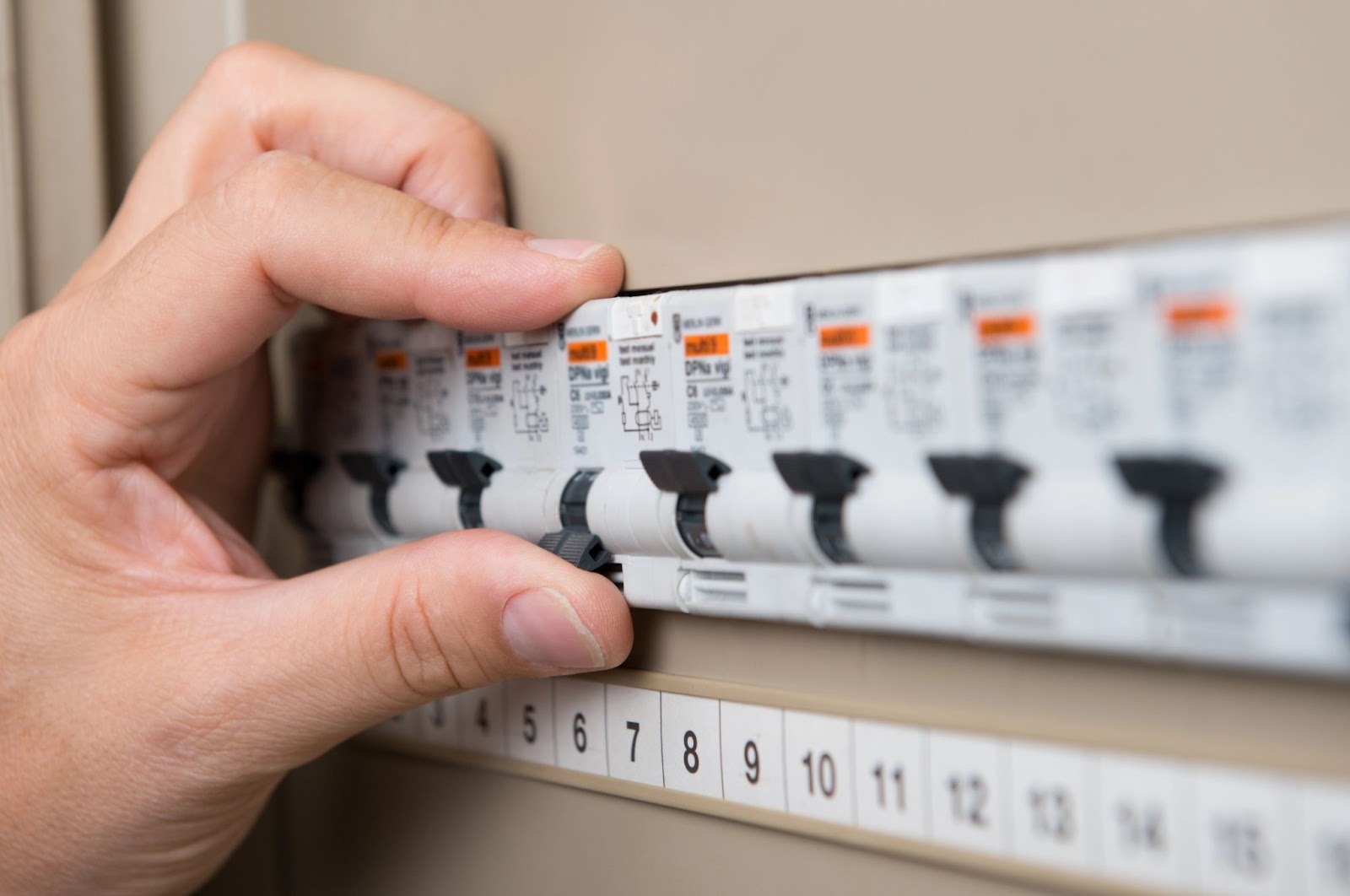
Your home’s electrical panel could also be the cause of your flickering light problems.
Older or overloaded panels often struggle to distribute power evenly throughout a home, and also pose an electrical fire risk, making a professional inspection and panel upgrade the safest solution.
Utility Company or External Power Issues
In some cases, your flickering light problems may not have to do with anything happening inside your home.
Damaged power lines, transformer issues, and severe weather can all disrupt power and cause light flickering in the process. So, if the problem is new, and you find out that your neighbors are experiencing the same issues, it most likely stems from your utility company rather than any fault in your home.
How To Fix a Flickering Light Safely
If you’re experiencing problems with flickering lights, your ability to fix it is completely dependent on what is causing the problem in the first place.
If the problem is isolated to one light, then changing the lightbulb will most likely be all you need to do to fix the problem. However, if the problem stems from anything else, you’ll almost certainly need to call a professional electrician to perform an inspection and resolve the issue.
Electricity can be dangerous, and even the simplest mistake can hurt you or others. So, if you are the DIY type, unless you have extensive prior experience working on electrical systems, you should always stay safe and trust the professionals.

Get Help With Flickering Lights
Are you struggling to figure out why your lights are flickering? Do you need a trusted professional who can help? Give us a call at 610-869-7325, or contact us on our website.
Our friendly team of local certified electricians is always here to answer questions and will happily help you narrow down what might be causing your light flickering problems. Then, if it’s more than just a faulty bulb, we’ll gladly help you schedule the specific services you need to fix the problem at a time that’s most convenient for you.
Don’t put up with your flickering lights any longer. Contact New London Electric and get the professional electrician you need today.